

We are often asked to install privacy hedges for luxury estate landscape design in the Bay Area and with towns like Atherton and Palo Alto that have small lots, there is a high demand for fast growing, instant hedges for privacy.
Some of the top characteristics that make a good hedge are fast growing, evergreen, and low maintenance. While there aren’t any hedges that can be neglected as soon as they are planted, there are some great options that will give you an instant privacy screening without much effort on your part.
English Laurel Prunus Lauroceracus
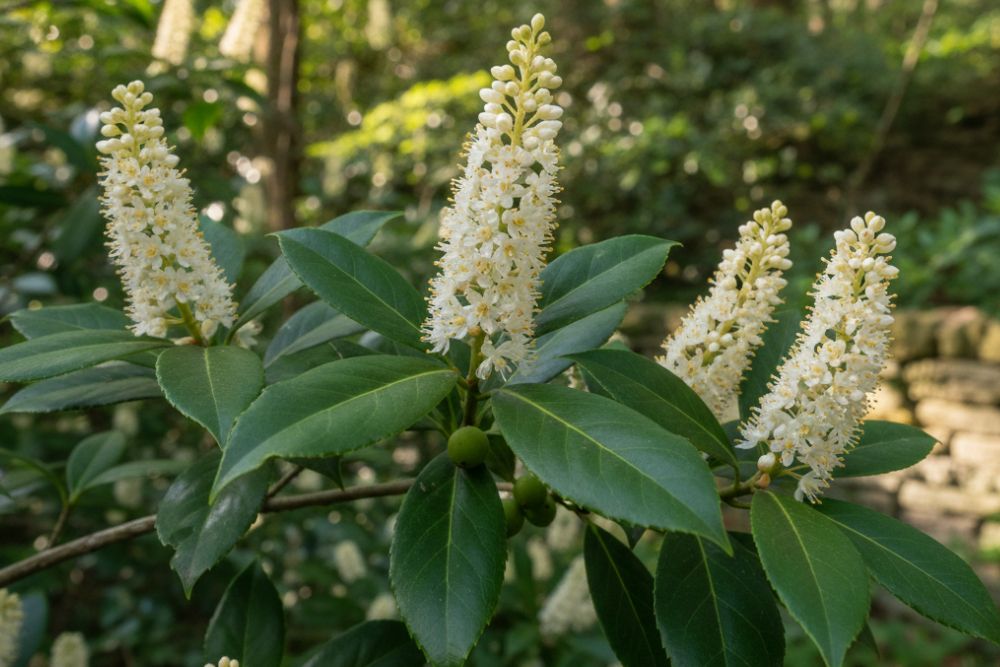
This is by far one of, if not the most popular hedges in the Bay Area. In fact there are many large farms in Oregon that grow only English Laurels to meet this demand.
English Laurels are a fast growing evergreen hedge that can bring a classy look to any fancy zip code. They have glossy vibrant green foliage and can easily be pruned into a dense hedge over time.
If you are hoping to have a consistently green, dense hedge it’s important to consider that these Laurels like full sun and good soil. The more sun, water and fertilizer they get, the easier it will be to develop these into a dense green wall.
Regular watering and fertilizer will be the next step to reaching full, green fort knox level privacy. If you have just planted a hedge of English Laurel, watering them for 20-30 minutes every other day with drip irrigation during the summer should be enough if they are newly planted. Once they get more mature this time can be reduced slightly depending on the weather.
We have seen many English Laurels start to yellow from either overwatering or a lack of nitrogen in the soil. They like to be fed with a balanced fertilizer each spring to keep them growing all summer. Though in the Bay Area, a great time to fertilize with organic fertilizer is in the winter when the intense rains bring fertilizer-soaking moisture.. and worse traffic. One may also want to consider fertilizer injections (liquid fertilizer) into the rootball to promote fast acting growth.
Podocarpus Macrophyllus
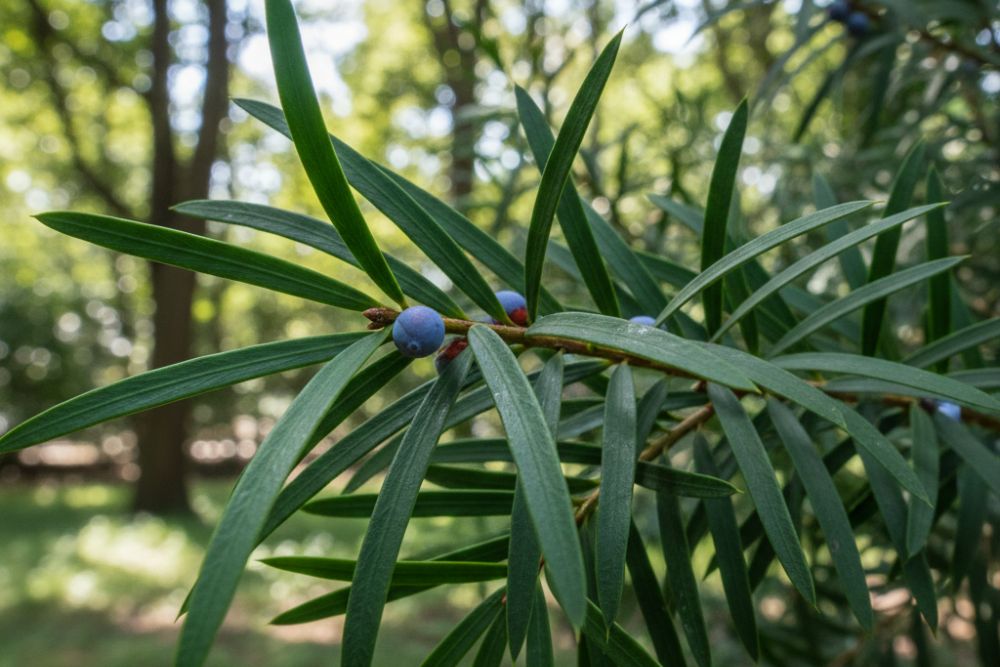
This is one of our favorite screening hedges, especially for shade. Podocarpus is a conifer, meaning it is a cone bearing plant which means it also has needles instead of leaves. When people think of needles on a tree or shrub they likely think of it as being messy, though fortunately Podocarpus is a fairly clean yard guest. It has very small deep green needles with an attractive rubbery feel.
There are many different varieties of Podocarpus with some varieties grown as an ornamental small tree for its blue needles. Podocarpus macrophyllus is what is typically grown in the Bay Area for privacy hedges.
One of our favorite characteristics of this tree/shrub is that it has a very elegant look to it and can easily fit in a Japanese garden aesthetic. They can be left to grow as a large ornamental tree, a very tall hedge, short hedge, or even the dreaded spherical topiary (That’s best left to the topiary friendly Boxwood) Its versatility is one of its strengths.
These can be very easy to maintain once established, and we would even consider them to be lower maintenance than English Laurels thanks to their smaller needles than large English Laurel leaves. A smaller needle can be easier to keep green with less nutrients than a large glossy leafed plant. They can tolerate some shade well, while keeping their form and providing a shade garden feel.
Pittosporum
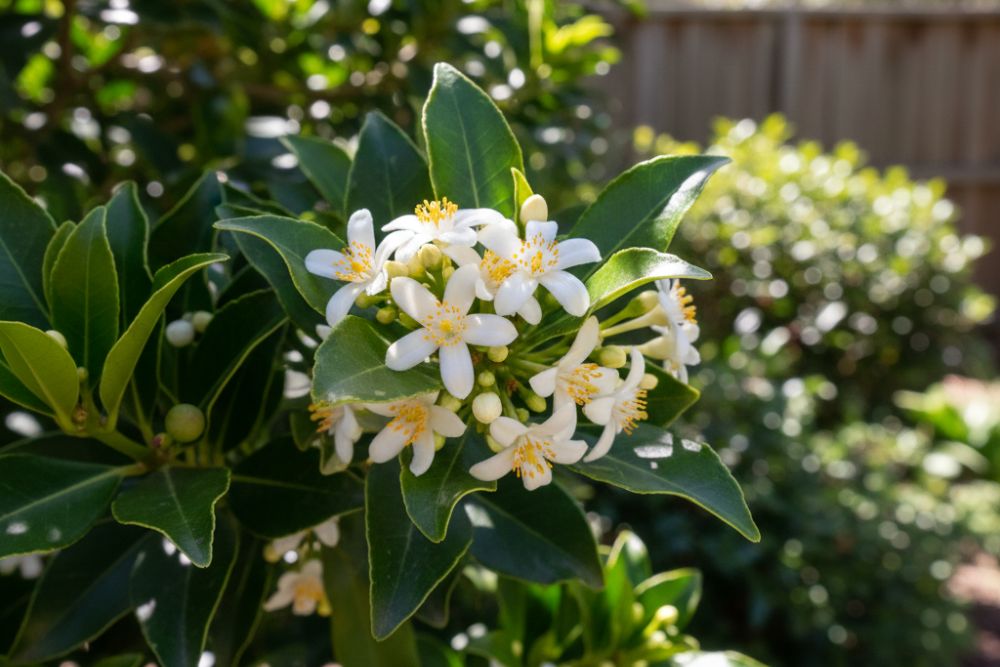
There are too many of these varieties to keep track of. I regularly get introduced to some obscure variety or forget the sub variety that is trending at the moment. However there are a few varieties that make great privacy hedges even with their complicated sublineages.
Native to New Zealand, Pittosporums are a popular choice for homeowners that love green hedges and elegant green blobs in their landscapes. Some of the blob varieties can be interesting- ‘Golf ball’ and ‘Wheelers dwarf’ can be great anchors to a garden or a green filler when trying to plant something with year round interest.
It is a family of plants worth exploring if you are looking for an evergreen that is easy to maintain. There are even white/green variegated varieties that can add some interesting textures to your garden.
Pittosporum tenuifoliuim is the variety that is often grown as a tall green hedge in the Bay Area. They are known commonly as Kohuhu in New Zealand and are native to the north and south island. There’s just something about having a plant from the other side of the world growing in your landscape. The fact that it is native to New Zealand makes it more interesting than a typical old boxwood.
Pittosporum are pretty easy to maintain though they don’t like to be overwatered. Well, no plants like to be overwatered in general though Pittosporums can show some distressing signs like bleeding sap and wilting when getting too much water. They can also be susceptible to pests when they don’t get enough circulation (which can happen when they are pruned as a dense hedge). Whitefly can be pretty common and as a result sooty mold can occur. This can easily be solved by some over the counter products like neem oil and other pest deterrents that can be put in the soil.
Whichever hedge you end up choosing for your home, we would recommend sticking with the characteristics at the beginning- evergreen, fast growing and easy to maintain. You want your hedge to become a big green wall that you can rely on to keep you in your own vegetative fortress as long as possible. These plants will be a great way to start building that big green fortress.