
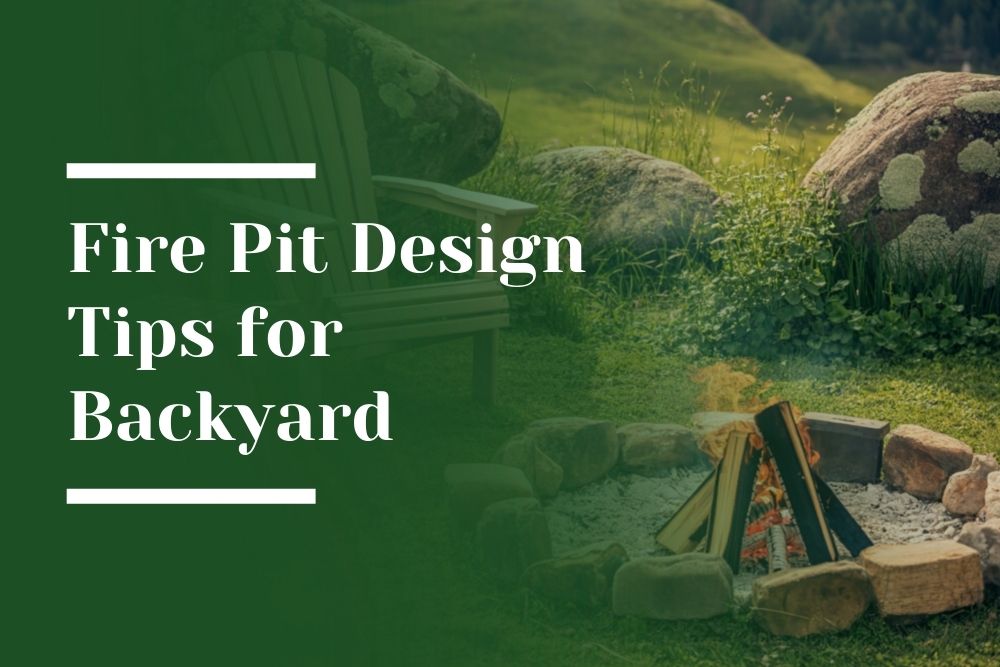
Designing a fire pit for a luxury backyard involves more than choosing a shape or fuel type. The most successful fire features feel like they belong to the landscape — integrated into the architecture, planting, and overall outdoor layout. In Palo Alto and across the Bay Area, where outdoor spaces often reflect both modern design and natural surroundings, fire pit styles tend to balance simplicity with strong visual presence.
Choosing the right design begins with understanding how the space will be used and how the fire feature will relate to the rest of the backyard.
Modern Linear Fire Pits for Contemporary Homes
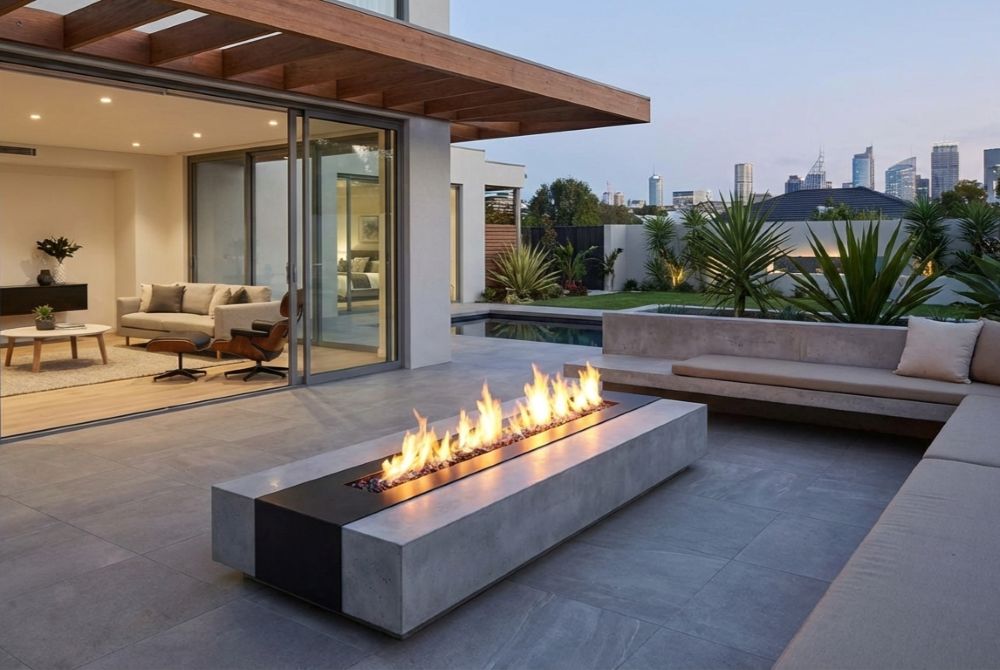
For homes with clean architectural lines and minimalist outdoor spaces, a modern linear fire pit often works best. These designs typically use concrete, smooth stone, or metal finishes that complement contemporary architecture. Their elongated shape allows for flexible seating arrangements and creates a strong visual axis within the landscape.
A linear fire feature can be integrated into low retaining walls or built into patio edges, allowing it to function as both a design element and a structural feature. When paired with simple seating and restrained planting, this style supports a refined and uncluttered outdoor backyard design.
Modern fire pits are especially popular in Palo Alto neighborhoods where architecture leans toward glass, steel, and natural stone. Their understated appearance complements these materials without overwhelming the space.
Natural Stone Fire Pits for Timeless Appeal
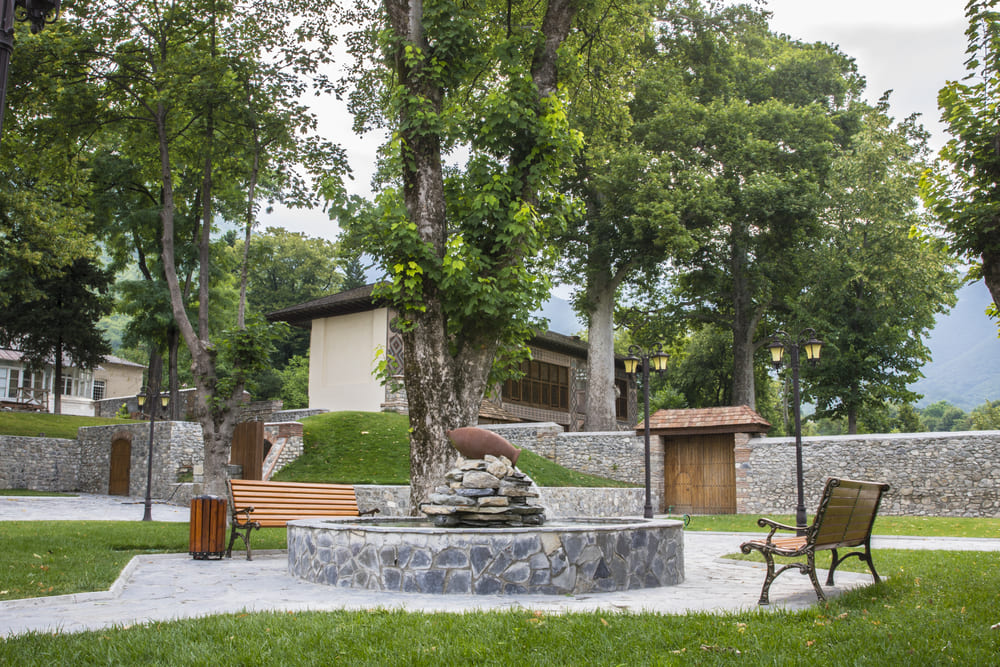
Natural stone fire pits offer a more traditional aesthetic and blend easily with mature landscapes and established gardens. Stone introduces texture and warmth, helping the fire feature feel grounded within the environment. This style works particularly well on larger properties where the goal is to create a backyard that feels settled and enduring rather than newly constructed.
Circular or square stone fire pits often become gathering points within a larger seating area. Surrounding them with gravel, decomposed granite, or stone paving helps define the space while maintaining a relaxed atmosphere. When combined with layered planting and subtle lighting, the result feels both inviting and visually balanced.
For homeowners exploring fire pit design backyard concepts that will age well over time, natural stone remains one of the most reliable choices.
Sunken Fire Pit Lounges for a Resort-Like Experience
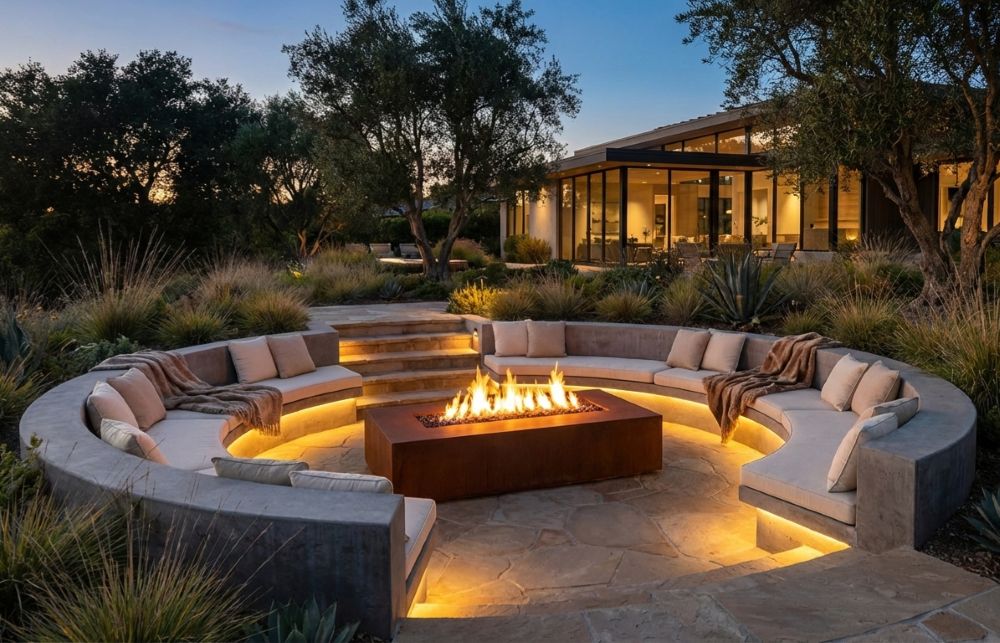
On larger properties or estate-style backyards, sunken fire pit areas can introduce a sense of intimacy within a more expansive landscape. By lowering the seating area slightly below grade, the fire pit becomes a destination rather than just an accessory. This approach works particularly well when the goal is to create a space that feels separate from dining or pool areas.
Sunken fire lounges are often surrounded by built-in seating or low retaining walls that double as backrests. Incorporating soft lighting and structured planting around the perimeter helps the space feel enclosed without being isolated.
In Palo Alto’s luxury neighborhoods, where homeowners often seek outdoor environments that feel like private retreats, this type of fire feature can create a distinctive and memorable backyard setting.
Fire Tables and Flexible Gathering Spaces
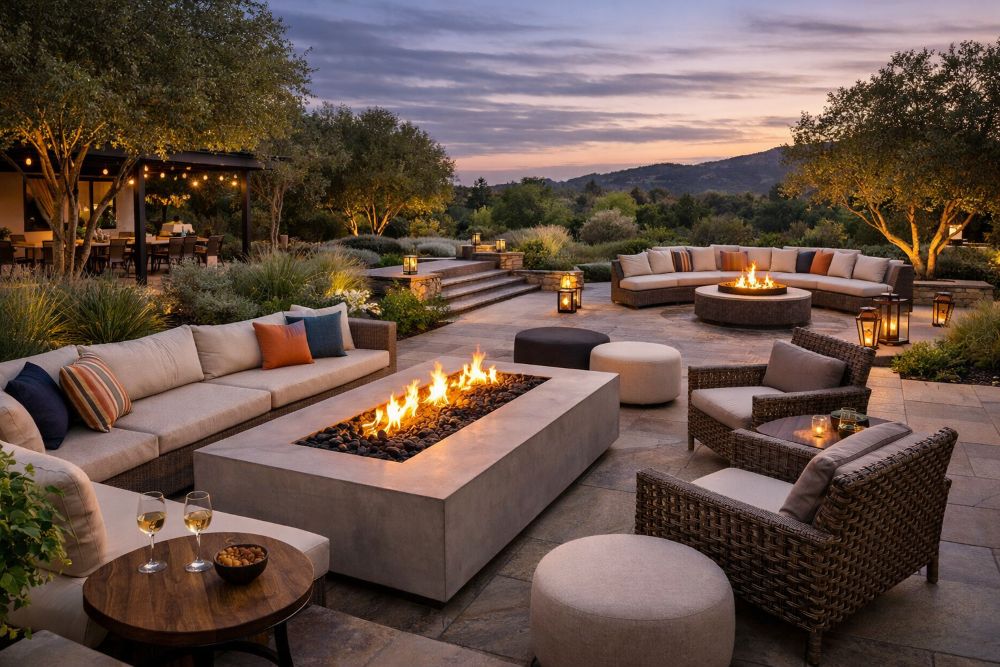
For homeowners who prefer a more adaptable setup, fire tables offer flexibility without sacrificing visual appeal. These designs combine the warmth of a fire pit with the functionality of a table, making them ideal for smaller patios or multipurpose seating areas.
Fire tables work particularly well in compact outdoor spaces where a permanent built-in structure may not be practical. They can also complement larger landscapes by providing additional gathering points beyond a main fire feature.
While they may appear simpler, their placement still benefits from thoughtful landscape planning to ensure they align with pathways, seating zones, and overall backyard flow.
Integrating Fire Features With Planting and Hardscape
Regardless of style, a fire pit should feel connected to its surroundings. This means considering how it interacts with nearby planting beds, pathways, and architectural elements. Fire features that appear isolated or disconnected from the rest of the landscape often feel temporary or out of place.
Using consistent materials across hardscape elements — such as stone used in both pathways and the fire feature — helps unify the design. Planting around the seating area can soften edges and introduce seasonal interest without obstructing views or circulation.
Homeowners searching for landscape designers near me often find that the most successful fire pit installations are those that feel integrated into a larger outdoor vision rather than treated as standalone additions.