
A backyard can have plenty of space and still feel like something is missing. Often, the problem is not the size of the garden, but the lack of a defined place to sit, dine, relax, or spend time outdoors.
A pergola can change that. It gives an open backyard a sense of structure while creating a comfortable area for everyday use, entertaining, and enjoying the garden.
What Does a Pergola Add to a Backyard?
A pergola creates a defined outdoor area without fully enclosing it. Unlike a solid roof or enclosed structure, it keeps the garden feeling open while giving one part of the yard a clear purpose.
It can sit beside the house, extend from an existing patio, or become a separate feature farther into the garden. The right location depends on how the space is used and what the property already offers.
For a larger Menlo Park property, a pergola can also help break up a wide backyard into smaller areas. A lawn, planting beds, dining area, and pergola can each have their own role while still feeling connected.
Create a More Comfortable Outdoor Living Space
One of the simplest reasons to add a pergola is to make the backyard more comfortable.
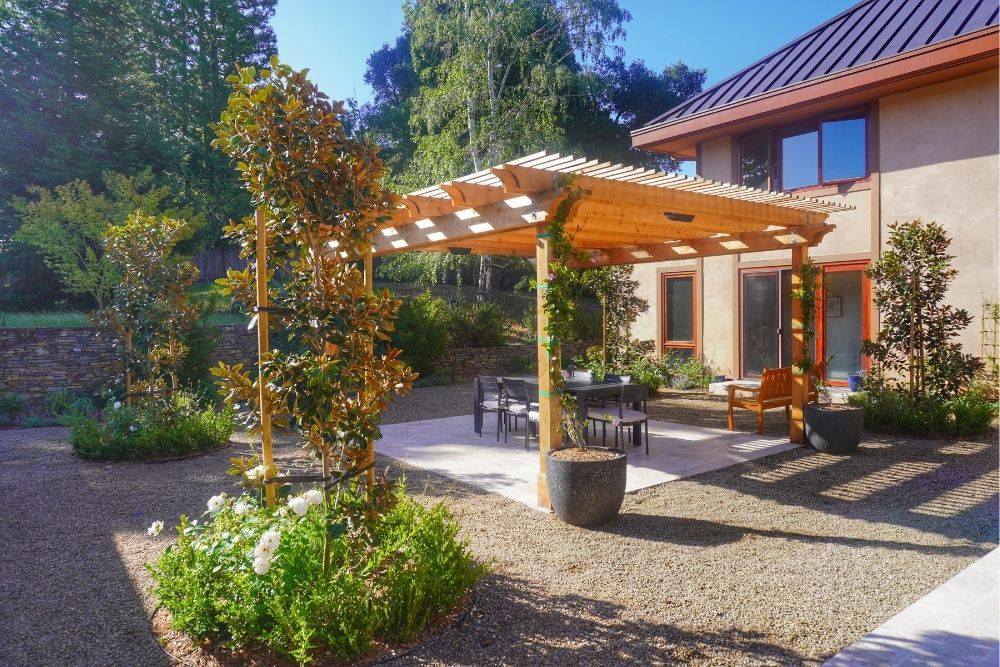
A pergola can provide partial shade over an outdoor dining table, lounge chairs, or a sitting area. Depending on its design and orientation, it can help make an exposed part of the garden more pleasant during the warmer months.
It also gives outdoor furniture a natural place to belong. Instead of placing a table and chairs in an open section of lawn or patio, the pergola creates a room like setting around them.
This can make a difference in how often the space is actually used. A backyard becomes more useful when there is a comfortable place to have breakfast, read, have friends over, or enjoy dinner outside.
Give the Backyard a Stronger Focal Point
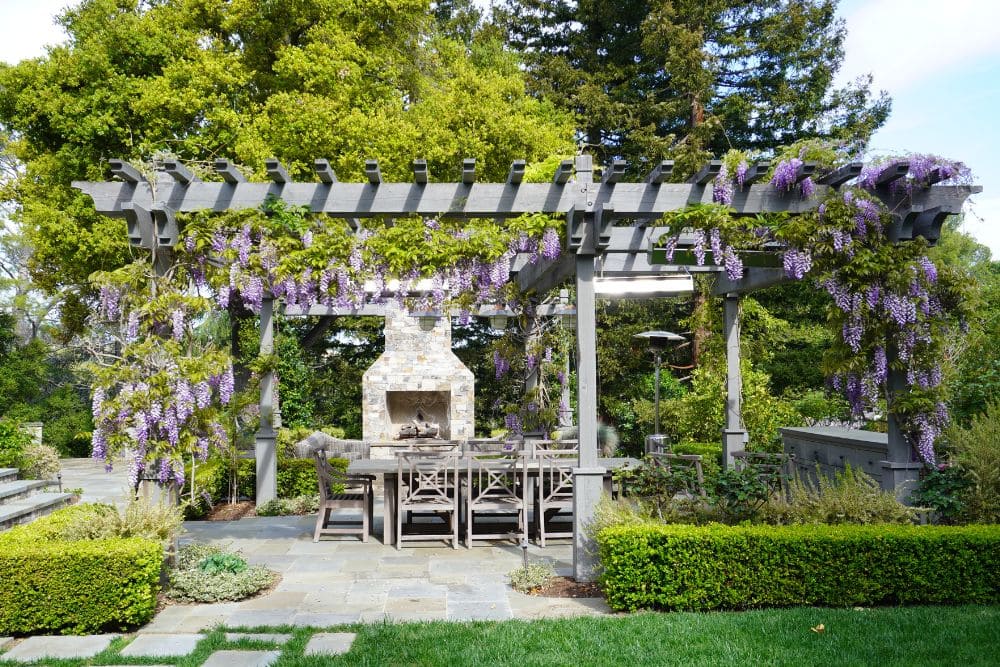
A large garden can sometimes lack a clear focal point. A pergola gives the eye somewhere to go and can help organize the surrounding landscape.
Planting, pathways, lighting, and furniture can all be arranged around the structure. This creates a stronger connection between different parts of the garden.
The pergola itself does not need to be elaborate. Good proportions and the right placement often matter more than adding unnecessary details.
In a well planned backyard, the structure should feel like part of the landscape rather than an object placed in the middle of it.
Add Privacy Without Closing Off the Garden
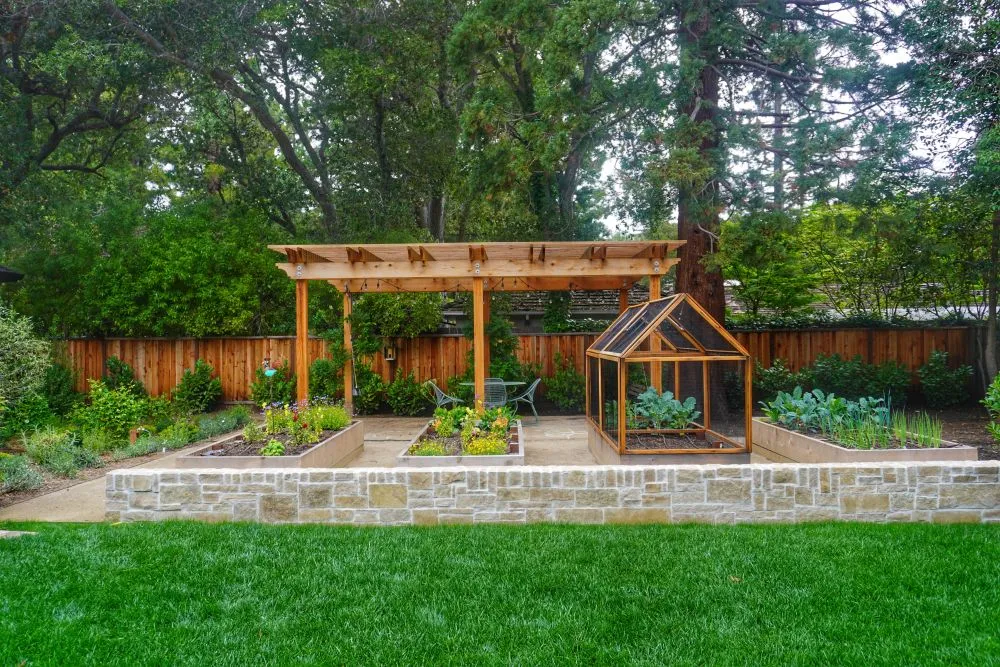
Privacy is another reason a pergola can work well in a Bay Area backyard.
Planting around the structure can create a softer screen from neighboring properties without making the space feel closed in. Trees can provide height, while shrubs and climbing plants can fill in the lower and middle layers.
Climbing plants are particularly useful around pergolas because they can soften the structure over time. The planting can also change with the seasons, adding flowers, foliage, or fragrance to the outdoor space.
For properties with established trees, the pergola can sometimes be positioned to work with the existing canopy. This can provide additional shade and privacy while preserving the character of the garden.
Connect the Pergola With the Rest of the Landscape
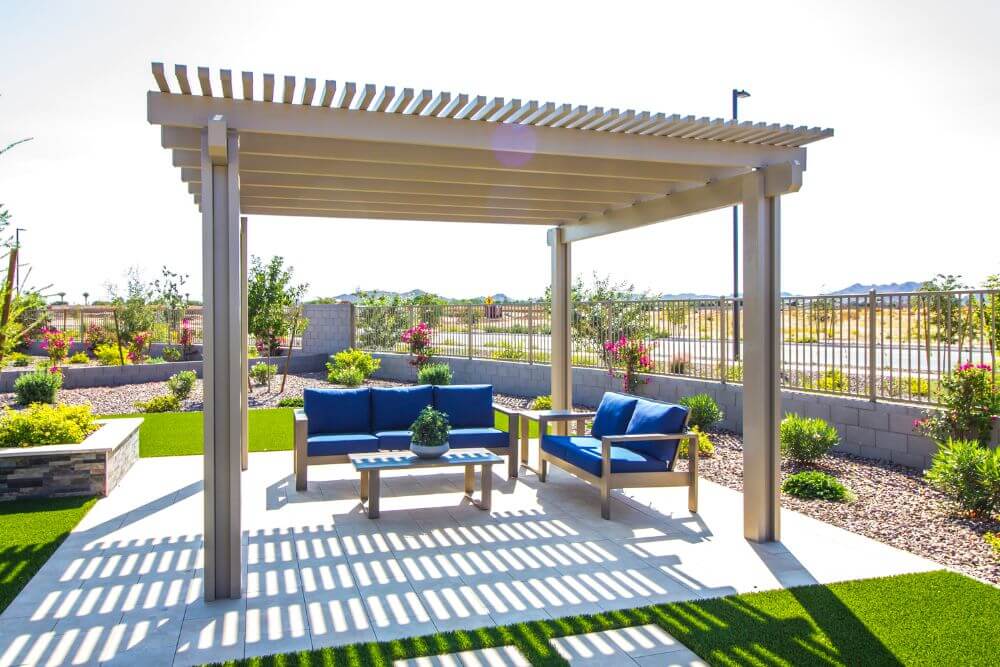
A pergola should relate to the landscape around it.
Its size, materials, location, and proportions should work with the architecture of the house and the character of the garden. Paving can connect it to the house, while planting can help blend the structure into the surrounding landscape.
Irrigation and lighting are also worth considering early. Lighting can make the space useful after sunset, while properly planned irrigation keeps surrounding plants healthy without creating unnecessary maintenance.
The pathway leading to the pergola matters as well. A simple stone or gravel path can make the structure feel like a destination within the garden rather than just another sitting area.
This is where good landscape design makes a noticeable difference. The individual elements may be simple, but they need to work together.
Use the Pergola for More Than Shade
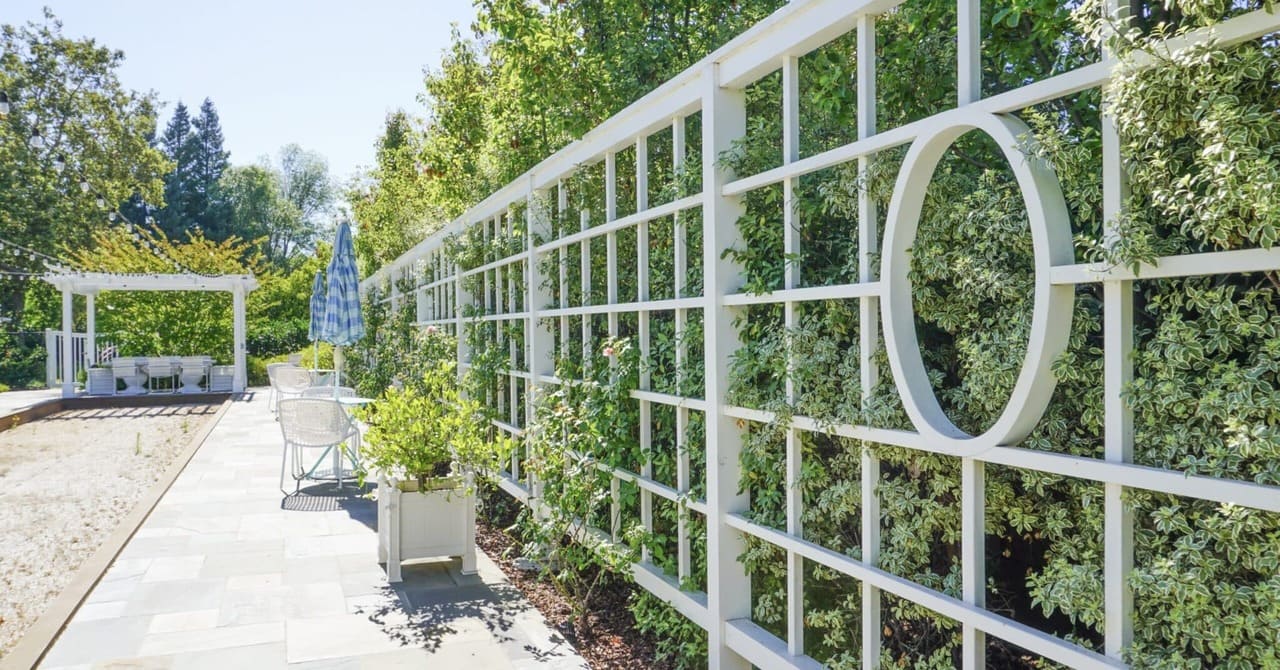
A pergola can serve several purposes depending on how the backyard is used.
It can provide a setting for outdoor dining, create a comfortable lounge area, or become a place for entertaining friends and family. It can also support climbing plants and provide a framework for garden lighting.
In larger backyards, a pergola can sit near an outdoor kitchen or dining area. It can also mark the transition between the house and a more garden focused part of the property.
The key is to decide how the space will be used before choosing the structure. A pergola designed around dining will have different needs from one intended mainly for relaxing or entertaining.
When Should You Work With a Landscape Designer?
A pergola can be a relatively simple addition, but its location can affect the entire backyard.
A landscape designer can look at the relationship between the house, existing trees, sun exposure, privacy, pathways, planting, and outdoor living areas before deciding where the structure should go.
This can be particularly helpful when the backyard already has established landscaping. Moving or removing plants later can be costly, so it makes sense to consider the pergola as part of the larger landscape rather than as a separate project.
A landscape design company can also coordinate the surrounding elements, including paving, planting, irrigation, lighting, and other outdoor features.
Designing a Pergola for a Menlo Park Backyard
Menlo Park properties can vary considerably in size, architecture, and existing landscape. Some backyards are compact and closely connected to the house, while others have enough space for several distinct garden areas.
The local climate also makes outdoor living practical for much of the year. A pergola can provide shade during hot, dry periods while keeping the garden open during the cooler seasons.
Existing trees should also be considered. A mature tree may already provide valuable shade and character, making it possible to position the pergola nearby rather than adding a large structure simply for coverage.
The architecture of the home matters too. A pergola that works well with a modern house may look out of place beside a traditional property. Materials, scale, and details should relate to what is already there.
A Pergola Should Feel Like Part of the Backyard
The best pergolas do more than provide shade. They give the backyard a purpose and create a place where people naturally want to spend time.
They can define an outdoor room, improve privacy, support planting, and connect different parts of the garden. With the right placement, a relatively simple structure can change how the entire backyard feels and functions.
For homeowners considering a larger backyard update, the pergola is worth considering as part of the overall landscape design. Professional landscape design services can help determine how the structure, planting, paths, and outdoor living areas can work together on your Menlo Park property.