
Wisteria can change the character of an outdoor space as it matures. Trained over a pergola, arbor, or garden structure, its long flowering stems can soften hard lines and create a stronger connection between the architecture and the surrounding landscape.
For a Woodside estate undergoing renovation, Wisteria can also be more than an ornamental planting. It can help define outdoor rooms, frame garden paths, and give existing areas a renewed sense of purpose.
Why Wisteria Works Well in an Estate Garden
Wisteria has a strong presence, especially when it is allowed to mature on a properly designed structure. Its foliage creates shade and its flowers add seasonal interest without requiring a large collection of different plants.
It can also help connect separate parts of a large property. A Wisteria covered arbor might lead from the house toward a pool or garden, while a pergola can create a transition between the main residence and an outdoor dining area.
Add Wisteria to a Pergola
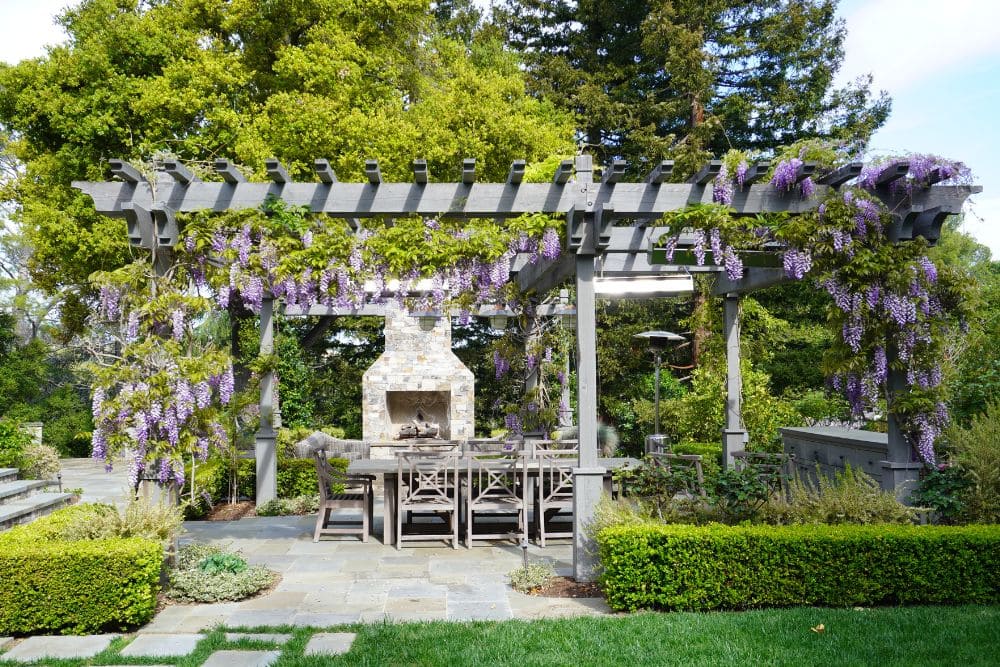
Pergola provides one of the most natural settings for Wisteria. The structure gives the vine something substantial to climb while creating an overhead element that can define an outdoor living space.
In a renovated backyard, a Wisteria pergola can sit above a dining table, seating area, or outdoor kitchen. As the planting develops, the foliage and flowers can soften the structure and make the space feel more connected to the garden.
The structure itself also needs to be designed with the mature plant in mind. Wisteria can become substantial over time, so the pergola should be strong enough to support its growth.
Create a Wisteria Covered Garden Arbor
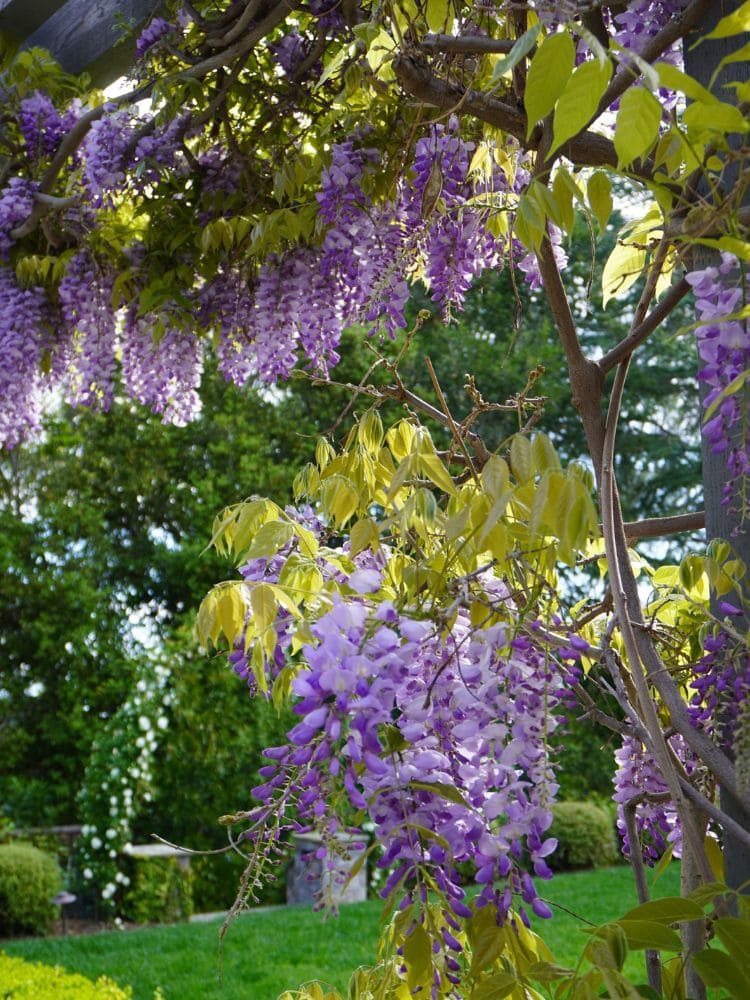
An arbor can give a large garden a clear point of transition. It might mark the entrance to a rose garden, connect two garden areas, or frame the view toward a lawn or courtyard.
Wisteria can make this type of structure feel established and integrated with the landscape. Rather than looking like a feature placed in the middle of the garden, the arbor can become part of the planting and architecture.
For an estate renovation, its location matters as much as the structure itself. An arbor placed along an important sightline can become a focal point that is visible from the house or another part of the property.
Use Wisteria Along a Garden Walkway
Long pathways are common in larger estate landscapes, but they can sometimes feel disconnected from the rest of the garden. Wisteria can help give these transitions more character.
A vine trained over a series of arches can create a shaded passage between different garden rooms. It can also frame a walkway leading from the residence to a pool, guest house, vegetable garden, or more private part of the property.
The goal is not to cover every pathway with planting. One carefully chosen section can be enough to create a memorable transition.
Work With Existing Landscape Features
Landscape renovation is often about deciding what should stay as much as what should change. Mature trees, established shrubs, stone walls, patios, terraces, and existing garden structures can all influence where Wisteria should be introduced.
This is particularly important on older Woodside properties where established planting may already give the landscape much of its character.
A landscape designer can look at the existing garden and determine whether Wisteria should become part of an existing structure or whether a new arbor or pergola would make more sense.
Choose the Right Location and Support
Wisteria needs a suitable place to grow. Sunlight, drainage, available space, and the strength of the supporting structure all need to be considered before planting.
It is also important to allow enough room for the vine to develop without interfering with roofs, gutters, windows, pathways, or other plants.
Regular pruning is another part of keeping Wisteria under control. Its vigorous growth can be an asset in a large garden, but it needs to be managed so the plant remains in proportion with its surroundings.
Connect Wisteria With the Architecture
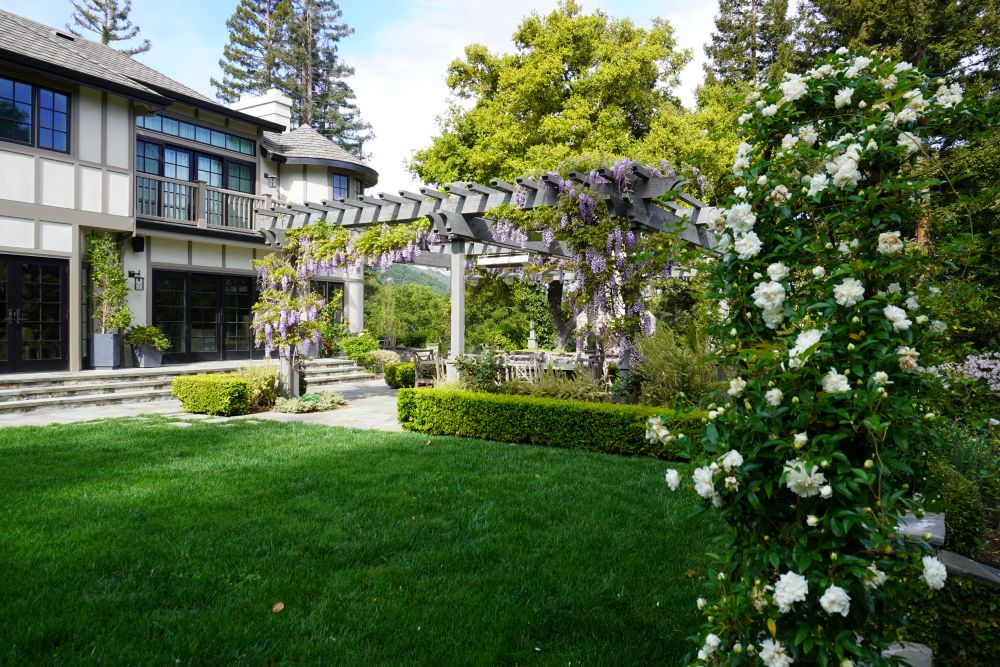
The best landscape renovations usually feel connected to the home. A pergola or arbor should relate to the architecture rather than looking like a separate feature added later.
For example, a traditional Woodside residence might suit a more detailed arbor with natural stone or painted wood, while a contemporary property may call for simpler lines and fewer materials.
The surrounding planting can reinforce that connection. Wisteria can be combined with clipped hedges, roses, grasses, evergreen shrubs, or more naturalistic planting depending on the character of the property.
Wisteria and Outdoor Living in Woodside
Large Woodside properties often have several outdoor areas, but they do not always feel connected. A pergola or arbor covered with Wisteria can help create a transition between these spaces.
A dining terrace can lead into a garden through an arbor. A seating area can sit beneath a pergola. A pathway can continue beneath a vine covered structure before opening onto a lawn.
These small changes can make a large landscape easier to experience and give different areas a clearer purpose.
When Professional Landscape Design Can Help
Adding Wisteria may seem like a simple planting decision, but it can have a much larger effect on an estate landscape. The location of the vine, the structure supporting it, surrounding plants, irrigation, and future maintenance all need to work together.
This is where professional landscape design services can be useful. A landscape designer can consider the existing property, architecture, mature planting, views, and how the family uses the outdoor spaces before deciding where Wisteria belongs.
For homeowners looking into landscape design Woodside CA, a renovation is also an opportunity to address several parts of the garden at once rather than adding individual features without a larger plan. Bay Area landscape contractors can then coordinate construction, planting, irrigation, and structural work as part of the renovation.
Planning Wisteria Into a Larger Estate Renovation
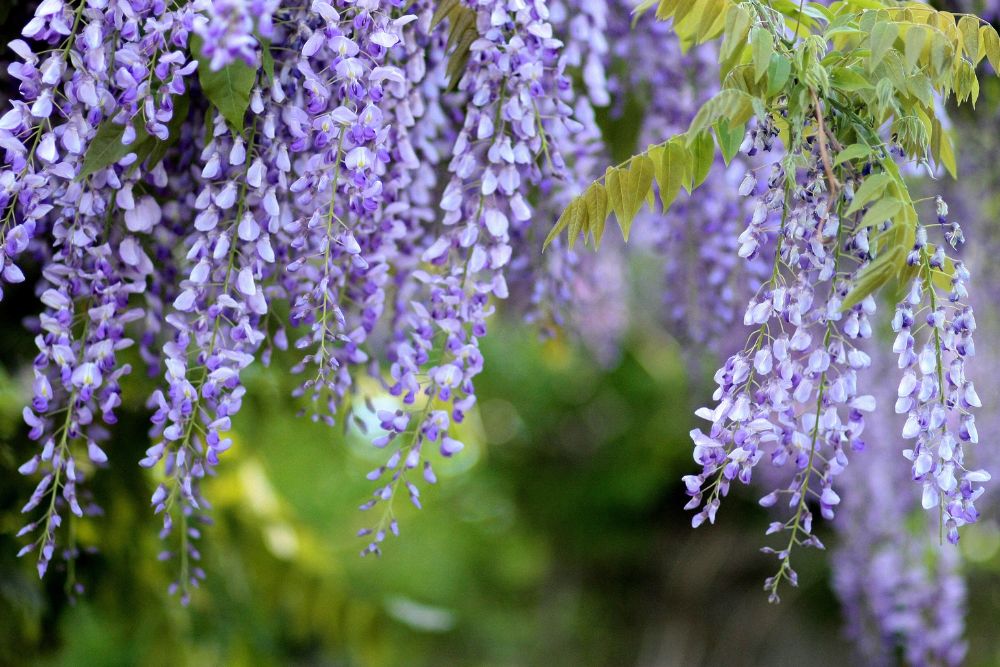
Wisteria works best when it is considered as part of the landscape rather than added as an isolated feature.
A renovation might include a new pergola, improved garden paths, updated planting, or a redesigned outdoor living area. Wisteria can help tie these elements together while adding seasonal character as it matures.
The plant does not need to dominate the garden. In many cases, one well placed arbor or pergola can have more impact than Wisteria spread across several parts of the property.
Garden Feature That Grows With the Landscape
Wisteria can bring structure, seasonal color, and a sense of maturity to an estate garden. When it is given the right support and placed carefully, it can become part of the architecture of the landscape rather than simply another plant.
For a Woodside property undergoing renovation, that makes Wisteria worth considering alongside the larger decisions about garden design, outdoor living, and how the landscape connects with the home. A well planned renovation can give the plant the space and structure it needs while creating a garden that becomes more established over time.